You Spin Me Right Round —
The Fidget Spinner Economy of 2017
June 28, 2026
Like a pet rock with a thud.
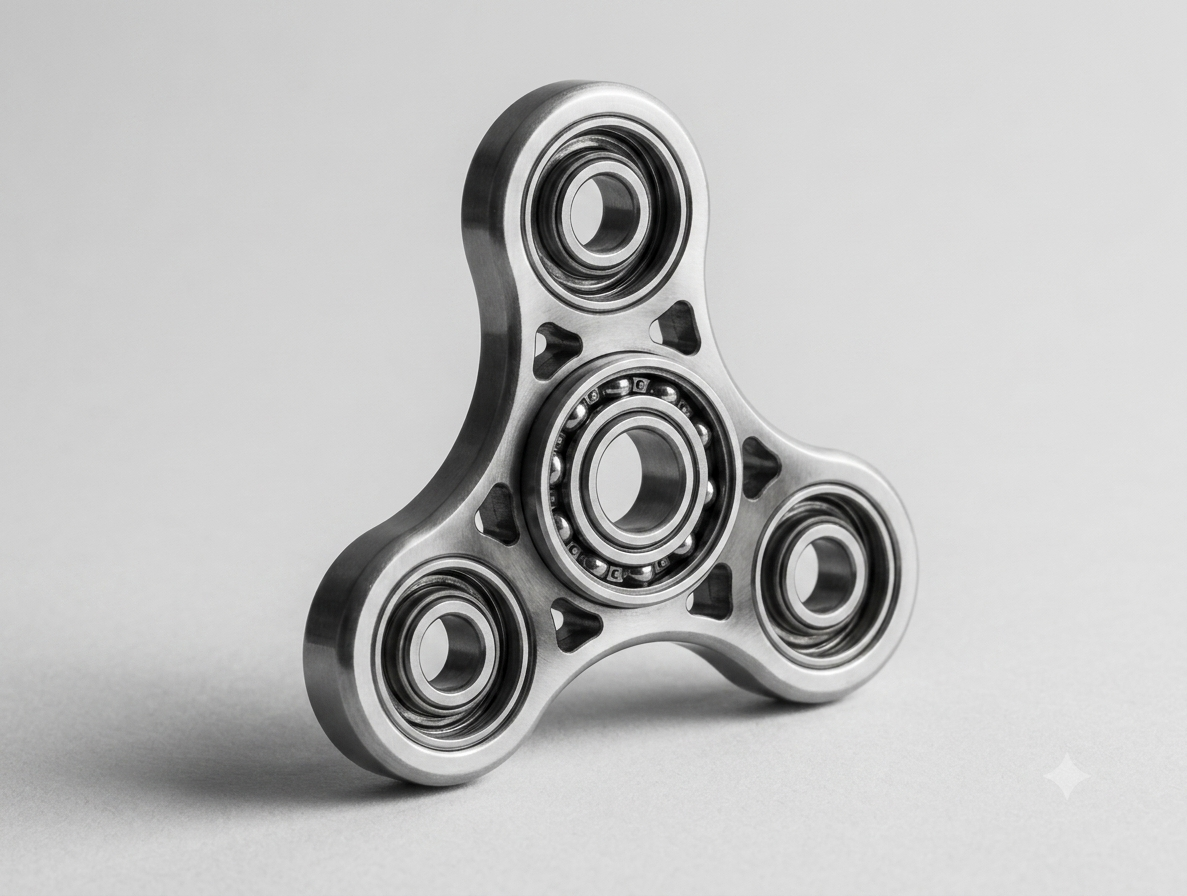
Every generation gets its own version of the “Why is this a thing?” toy. In the spring of 2017, ours arrived: the fidget spinner. A three‑armed piece of plastic or metal that spun, and… that’s it. It spun. Yet somehow it became a global obsession.
Made in China and shipped by the container load, fidget spinners were suddenly everywhere. Walmart and Target couldn’t keep them in stock. Amazon sellers were printing money. At the peak, they accounted for 17% of all online toy sales — a staggering number for a product that barely existed a year earlier.
My Dad Crusade
As the father of two young girls, I found myself on a quest — the kind of quest only a parent understands — to answer the call of: “Daddy, I want a fidget spinner.”
My promised land was an independent toy store catering to luxury‑minded, bougie parents. The kind of place where toys are “designed by childhood development experts,” which is code for “wooden blocks that cost $60.”
But this store had something else: events. Every Saturday, they hosted meet‑and‑greets with costumed characters.
- “Come in between 12 and 2 and meet Chase from Paw Patrol.”
- “Next week: Elsa and Anna.”
- “The week after: Spider‑Man.”
These weren’t just cute. They were strategic. They turned the store into a destination — a place where parents brought their kids for a moment, a photo, a hug, a memory.
And while you were there, surrounded by beautifully merchandised shelves of Montessori‑approved toys, you bought things. Not because you needed them, but because the store had created an environment where buying felt like part of the experience.
So yes, they had fidget spinners. Yes, they were $20. Yes, I became a hero.
And no, I didn’t notice any meaningful difference between my daughter’s $20 spinner and her friend’s $5 spinner from Five Below. They spun. That’s it.
Can You Build a Business on a Fidget Spinner?
Short answer: No.
Long answer: Still no, but let’s unpack it.
Someone sourced them from a factory in China. Someone imported them. Someone distributed them to stores like the one I bought from. Big box retailers likely had their own supply chains already humming.
Let’s imagine the economics:
The store buys a bulk case of 144 spinners at $3 each.
They retail them at $20.
Even if they sell every single one, that’s a nice pop — but it’s not a business.
It’s a SKU, not a strategy.
A SKU doesn’t build a company. A fad doesn’t build a company. A momentary spike in demand doesn’t build a company.
If you weren’t already in the import business, would you start one because of fidget spinners? Absolutely not. By the time you set up your supply chain, the craze would be over.
What Business Are You Actually In?
This is the real question — and the one most people never ask. Because the fidget spinner wasn’t a business. It was a mirror. It revealed what business you were already in.
As a Store (B2C)
Your job is to curate products, create an experience, and build a place people want to visit. You’re not just selling toys — you’re selling a moment.
The independent toy store understood this perfectly. They weren’t competing with Walmart. They were competing with:
- birthday party venues
- indoor play spaces
- children’s museums
Their meet‑and‑greets with Chase from Paw Patrol weren’t just adorable — they were traffic engines. They created urgency, drove foot traffic, and turned the store into a community hub.
Once you have families in the store, the $20 spinner becomes a souvenir from an experience — not a commodity.
As a Distributor (B2B)
Your job is to move volume, maintain relationships, and keep inventory flowing. You’re the middle layer between factories and retailers.
As a distributor, you must:
- predict trends before they peak
- buy in bulk
- manage warehouses
- maintain relationships with stores
- deliver consistently and quickly
- absorb the risk of unsold inventory
A distributor can make money on fads — but only if they already have the infrastructure. You don’t build a distribution company around a single product.
As an Importer
Your job is to source products from overseas, manage logistics, handle customs, and ensure quality control. Importing is not a product business — it’s a pipeline business.
If you weren’t already importing from China, the fidget spinner craze would not justify building an import operation from scratch.
As a Manufacturer
Your job is to produce, innovate, and scale. But manufacturing fidget spinners in the U.S. in 2017? Financial suicide. China owned the supply chain. Margins were razor thin. Competition was fierce.
The Bigger Lesson: Fads Don’t Build Businesses — Systems Do
The fidget spinner was a moment. A flash. A cultural blip with a loud thud.
You can’t build a business on a fad. But you can build a business that knows how to capitalize on fads — if you already have the infrastructure, the relationships, and the strategy.
The spinner was just the object.
The business was everything around it.
— Jeff