Chuck the Carpenter —
What a Poker Game Taught Me About Selling, Trust, and Showing Up
August 2, 2026
During college, I played in a “friendly” poker game with a group of blue-collar guys — early 20s to mid-30s — and I was the token “college boy.” The stakes weren’t high, nobody was gambling away the grocery money, but the conversations were richer than anything happening in my lecture halls.
These men lived in a different rhythm than I did. They bounced from job to job, worked with their hands, and carried the weight of adulthood long before I had to. I was still living at home, paying no rent, making decent money on the sales floor, and attending classes in the morning. They were ten to fifteen years older, already navigating marriages, mortgages, and the grind of physical labor. I still recall the irony of a 30 year old calling his wife “the old lady.”
For me, the games were an escape — from professors who debated theory, from classmates who hadn’t yet faced real responsibility, and from coworkers who lived for commission battles. I’d show up straight from work, still in a tie, take the “college boy” ribbing in stride, sip a beer, and mostly listen.
My seat was always to the right of Chuck. Not Charles. Not Charlie. Not Chaz. Just Chuck.
Chuck was either a carpenter or a plumber — I honestly can’t remember which — but like most of the men at that table, he was a jack-of-all-trades. He could build anything, fix anything, and diagnose a mechanical problem by sound alone.
And Chuck had a truck. A real truck. The kind that could hold a 4×8 sheet of plywood between the wheel wells with the tailgate closed. In Texas it would’ve had a gun rack; in New Jersey it carried tools, scars, and the dirt of a hundred job sites.
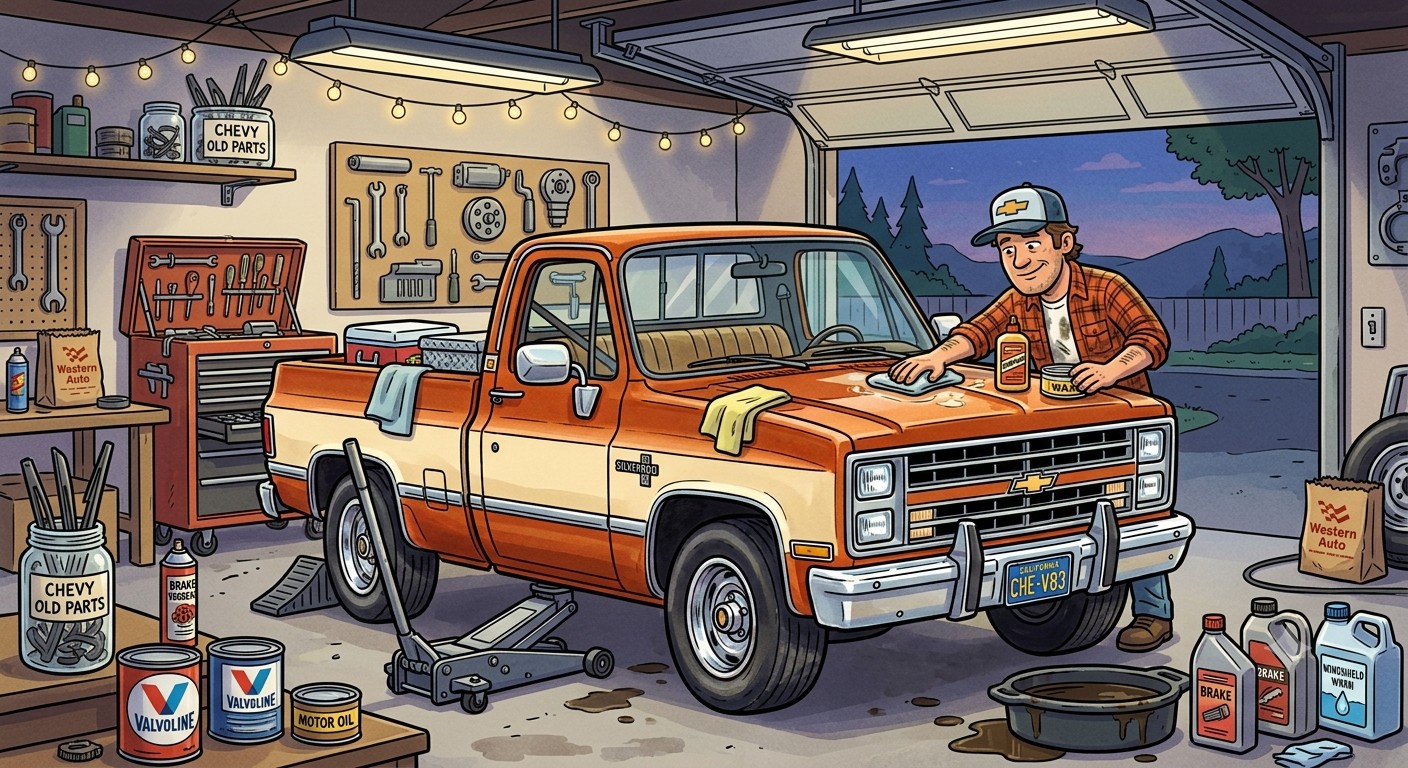
One night, the conversation turned to the truck he was buying. Not new — but newer. Babied by a homeowner who used it mostly to pull a popup camper. A big step up from his old Chevy.
“What’re you gonna sell the Chevy for?” someone asked.
“I’ve gotta feel it out,” Chuck said.
Later, he confided in me that he didn’t want to sell it to any of the poker guys. They were friends, and he needed to get every dollar he could because he was paying cash for the newer truck.
Elbow Grease Is a Sales Strategy
Every night after work, Chuck put elbow grease into “the old gal.” Oil change. Fluids topped off. New wiper blades. Tires rotated. Fresh fan belts. Engine cleaned with brake degreaser. Then a trip to Western Auto for compound and wax. Hours of hand-polishing until the truck looked like it had been loved.
He placed a small classified ad in the local paper and pinned a few index cards on grocery store bulletin boards. No price. No mileage. Just make, model, and phone number. This was the 1980s — long before online listings — when selling something meant thumbtacks, bulletin boards, and a phone that actually rang.
He wanted people to call — not prejudge.
He got calls. He invited one guy to come see the truck the night after our poker game.
“Think you’ll sell it?” someone asked.
“Can’t miss,” Chuck said.
The Dinner Table Close
Chuck had a system — one he used for tools, trucks, anything he sold. He scheduled the appointment near supper time. His wife made a home-cooked meal. He showed the truck, then invited the prospective buyer to join them for dinner.
A beer or two, warm conversation, and the kind of hospitality that makes a stranger feel like a long-lost friend.
If the buyer hesitated, Chuck didn’t push. He simply said:
“No problem. If the guy coming tomorrow passes, I’ll give you a call.”
He always sold the first appointment.
Always.
What Chuck Really Taught Me
Chuck’s method wasn’t about trickery. It wasn’t about salesmanship in the traditional sense. It was about something deeper — something timeless.
Preparation Is Persuasion
Chuck didn’t wing it. He earned the sale before the buyer ever arrived. The truck wasn’t just clean — it was cared for.
Hospitality Disarms Skepticism
A home-cooked meal turns a buyer into a guest. Guests don’t haggle. Guests don’t lowball. Guests don’t walk away from someone who treated them like family.
Control the Frame
By leaving out price and mileage, Chuck forced a conversation. He made the buyer step into his world instead of being judged on paper.
Scarcity Without Manipulation
“If the guy tomorrow passes…” It’s honest. It creates urgency without pressure.
Work Ethic Is a Brand
Chuck’s nightly elbow grease wasn’t just maintenance — it was identity.
Selling Is Never About the Product
Chuck didn’t sell trucks. He sold trust. He sold comfort. He sold confidence.
The Bigger Lesson
In a world obsessed with algorithms, online listings, and instant transactions, Chuck’s approach feels almost old-fashioned. But that’s exactly why it works.
Craftsmanship doesn’t end at the workbench — it extends to how you treat people.
Turns out, the secret to selling a truck wasn’t the wax job.
It was the meatloaf.