Pack Your Stuff — I’m Moving In
July 11, 2026
One of the best promotions I ever ran at Royal Music cost about a hundred bucks.
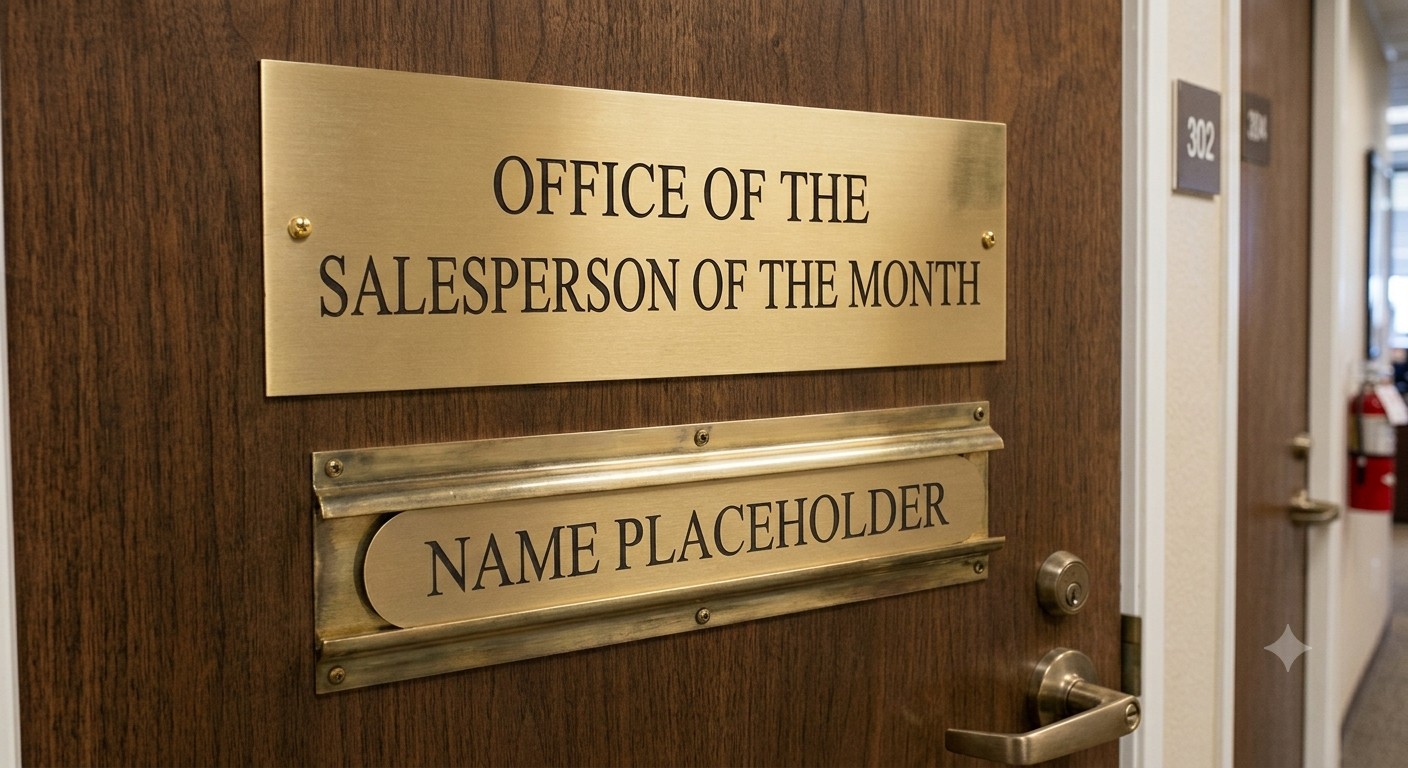
I had a private lesson room with a big window overlooking the showroom — prime real estate, even though nobody thought of it that way at the time. One day I cleared out the piano and organ, brought in a desk, and mounted a brass plaque on the door:
OFFICE OF THE SALESPERSON OF THE MONTH
Under it, I added a slide‑in nameplate holder. Suddenly, that little room became something entirely different.
Each month during our monthly budgeting meeting, I reviewed the store’s goals for the upcoming month and, using Management by Objectives (MBO), set each salesperson’s individual targets. MBO, introduced by Peter Drucker, is built on collaboration — managers and employees work together to set, record, and monitor measurable goals. Instead of handing someone a number, we agreed on targets together and tracked performance against the standards they helped create. When someone beat their goal, it wasn’t just a statistic — it was recognition, pride, and momentum. MBO gave them ownership of the number and tied their individual success directly to the store’s monthly budget.
We set goals in dollars, but the system works just as well in units. The key metric was percent to goal, not raw volume. If someone budgeted $15k and wrote $20k, they beat their goal by a larger percentage than someone who budgeted $25k and wrote $30k. That meant rookies could beat veterans — and sometimes they did.
One rookie in particular — a proper British gentleman — claimed the office for an entire summer. And he didn’t just use it; he inhabited it. He brought in family photos, arranged personal touches with quiet dignity, and settled into that room as though it were his rightful corner office. Watching him grow into the space while the veteran salesman fumed was one of the great joys of that promotion.
The teasing became part of the culture. Each month someone would have a strong week and say, “Pack your stuff — I’m moving in.” And let’s be honest — salespeople rarely said stuff.
I later shared the idea with a car dealer who ran the same promotion using units instead of dollars. He even gave up his own office to make it work. After a few months he told me he never wanted it back.
A private office carries dignity. It’s status. It’s recognition. And for many employees, that matters more than money.
When I ran this promotion, I had four full‑time and one part‑time salesperson. If you only have one or two, this won’t work — and honestly, that’s a dangerous staffing model anyway. I’ve seen stores collapse when their one top performer leaves.
A hundred dollars. A brass plaque. A little psychology.
It changed everything.